Water-Powered vs. Battery Backup Sump Pumps: Choosing the Right Emergency Protection for Your Home
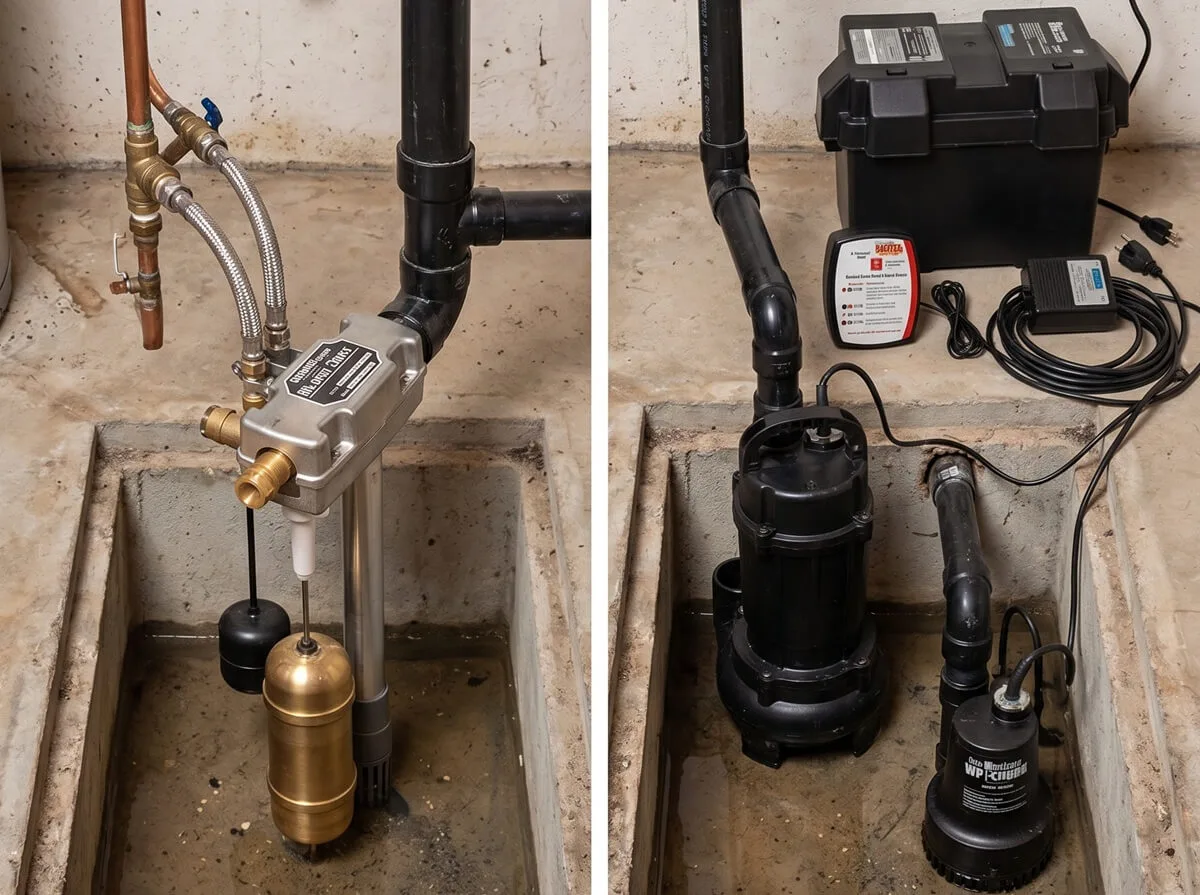
When it comes to protecting your basement from water damage, especially during severe weather, your sump pump is one of the most critical systems in your home. However, relying on a single pump alone, particularly one that depends on electricity, can leave you vulnerable during the exact moment you need it most. A storm-driven power outage is often when flooding risk is highest.
That is where backup systems come in. In this guide, we will compare two leading emergency sump pump solutions, battery backup systems and water-powered pumps, to help you decide which is best for your disaster preparedness plan.
Why a Primary Sump Pump Isn’t Enough in Stormy Weather
A primary sump pump is designed to handle normal groundwater conditions, but storms bring a different level of risk. Heavy rainfall can overwhelm your drainage system, while lightning and high winds often lead to power outages. Unfortunately, these two events frequently happen at the same time.
This combination creates the perfect storm for power outage flooding, where your electric sump pump stops working just as water levels are rising. Without a backup system, your basement is left unprotected.
Adding an emergency sump pump is not just an upgrade. It is a necessity. Backup systems provide sump pump redundancy, ensuring that even if your primary pump fails or loses power, water is still actively removed from your home.
Contender 1: The Battery Backup Sump Pump
Battery backup sump pumps are the most common secondary system installed in Canadian homes. These systems include a secondary pump connected to a rechargeable battery that activates automatically when the power goes out.
Pros & Cons
Pros:
- Simple installation: Battery systems are generally straightforward for plumbers to install alongside your primary pump. Many homeowners choose brands like Liberty Pumps for their reliability and widely available parts in Canada.
- Works anywhere: Unlike water-powered systems, battery backups function regardless of your water source. Whether you are on municipal water or a well, they will operate the same.
- Automatic activation: These systems detect power loss instantly and switch on without manual intervention.
- Strong pumping capacity: Many battery backup units can handle significant water flow, making them effective during heavy storms.
Cons:
- Limited runtime: The biggest drawback is battery capacity. Most systems will run for several hours, but extended outages can drain the battery completely.
- Maintenance required: Batteries degrade over time and typically need replacement every 3 to 5 years.
- Charging dependency: If your battery is not fully charged when a storm hits, your protection is reduced.
- Performance drops over time: Older batteries may not deliver full pumping power when needed most.
Battery backup systems are reliable and widely used, but their finite runtime means they may fall short during prolonged storms or multi-day outages.
Contender 2: The Water-Powered Sump Pump
Water-powered sump pumps operate using your home’s municipal water supply. Instead of electricity, they rely on municipal water pressure to create a vacuum that draws water out of your sump pit.
Pros & Cons
Pros:
- Infinite runtime: As long as your municipal water supply is functioning, the system will continue to operate. This makes it one of the most dependable solutions during extended emergencies.
- No batteries required: There is no need to monitor, charge, or replace batteries, which eliminates a major maintenance concern.
- Always ready: Unlike battery systems, there is no risk of reduced performance due to aging components.
- Highly reliable during outages: Since they do not rely on electricity, they are immune to power failures.
Cons:
- Requires municipal water: These systems only work if your home is connected to city water. Homes on well water cannot use this option effectively.
- Water usage: Water-powered pumps use a significant amount of municipal water to remove sump water, which can increase utility costs.
- Lower pumping efficiency: They generally move less water compared to electric or battery-powered systems.
- More complex installation: A proper backup pump installation requires integration with your home’s plumbing system, often needing a professional plumber familiar with local Canadian codes.
Despite these limitations, the key advantage, infinite runtime, makes water-powered systems extremely appealing for homeowners focused on long-term disaster resilience.
Key Decision Factor: Are You on Well Water or City Water?
This is the single most important factor when choosing between these two systems.
- If you are on municipal or city water:
You have the option to install either a battery backup or a water-powered sump pump. This gives you flexibility. It also gives you the opportunity to combine both systems for maximum protection. - If you are on well water:
A water-powered sump pump is not a viable option. Without municipal water pressure, the system cannot function. In this case, a battery backup system is your best and only choice for emergency protection.
For many rural Canadian homeowners who rely on wells, investing in a high-quality battery backup, potentially with a secondary battery, is critical.
Our Recommendation for Maximum Security
If your goal is true disaster preparedness, the best approach is not choosing one system over the other. It is combining them.
For homes connected to municipal water, installing both a battery backup and a water-powered system provides unmatched sump pump redundancy:
- The battery backup handles short-term outages and high-capacity pumping.
- The water-powered pump provides long-term protection with infinite runtime if the outage continues.
This layered approach ensures your home is protected in virtually any scenario, from brief blackouts to multi-day storms.
For Canadian homeowners, especially in regions prone to heavy rainfall and spring thaw flooding, this dual-system setup offers peace of mind that a single solution simply cannot match.
If budget or installation constraints limit you to one option:
- Choose battery backup if you are on well water or want higher pumping capacity.
- Choose water-powered if you are on city water and prioritize long-duration protection with minimal maintenance.
Contact Conterra Foundation Today
Flood prevention is not just about reacting to water. It is about planning for system failure. Power outages are not rare during storms. They are expected. Without a backup in place, even the best primary sump pump becomes useless.
An emergency sump pump system, whether battery-powered, water-powered, or both, is one of the smartest investments you can make in your home’s safety.
If you are considering a backup pump installation, contact Conterra Foundation to ensure your system is properly sized, installed, and compliant with local plumbing codes.