How to Tell if Your Window Well Drain is Connected to the Weeping Tile
A properly functioning window well drain is one of the most important yet overlooked components of a dry basement. When heavy rainstorms hit Southern Ontario, homeowners often discover just how critical this drainage system can be. If water begins accumulating around basement windows, it can quickly lead to leaks, foundation damage, and costly repairs.
Many homeowners assume that a window well drain automatically connects to their home’s foundation drainage system, but that is not always the case. Older homes, damaged drainage systems, and improper installations can leave window wells disconnected or unable to drain effectively.
Understanding how your window well drain works, and whether it is properly connected to the weeping tile system, can help you prevent basement window flooding and protect your home during severe weather events.
Why Window Well Drains Fail During Heavy Hamilton Downpours
Hamilton experiences frequent periods of intense rainfall, especially during spring storms and summer thunderstorms. During these heavy downpours, a window well can quickly fill with water if drainage systems are compromised.
Several issues can cause window well drains to fail:
- Clogged drainage systems
- Damaged or collapsed drain pipes
- Improper grading around the home
- Excessive soil settlement
- Blocked weeping tile systems
- Backfield clogging from sediment and debris
When rainwater cannot drain away efficiently, homeowners often notice water pooling in window well areas. If the water level rises high enough, it may seep through basement windows and into the home.
One common misconception is that a window well drain itself is the problem. In many cases, the drain may be functioning properly, but the connected drainage system beneath the foundation has become blocked or overwhelmed.
Because Ontario’s freeze-thaw cycles can shift soil and damage underground piping over time, drainage systems should be inspected periodically to ensure they remain operational.
The Core Connection: How Window Drains and Weeping Tiles Work Together
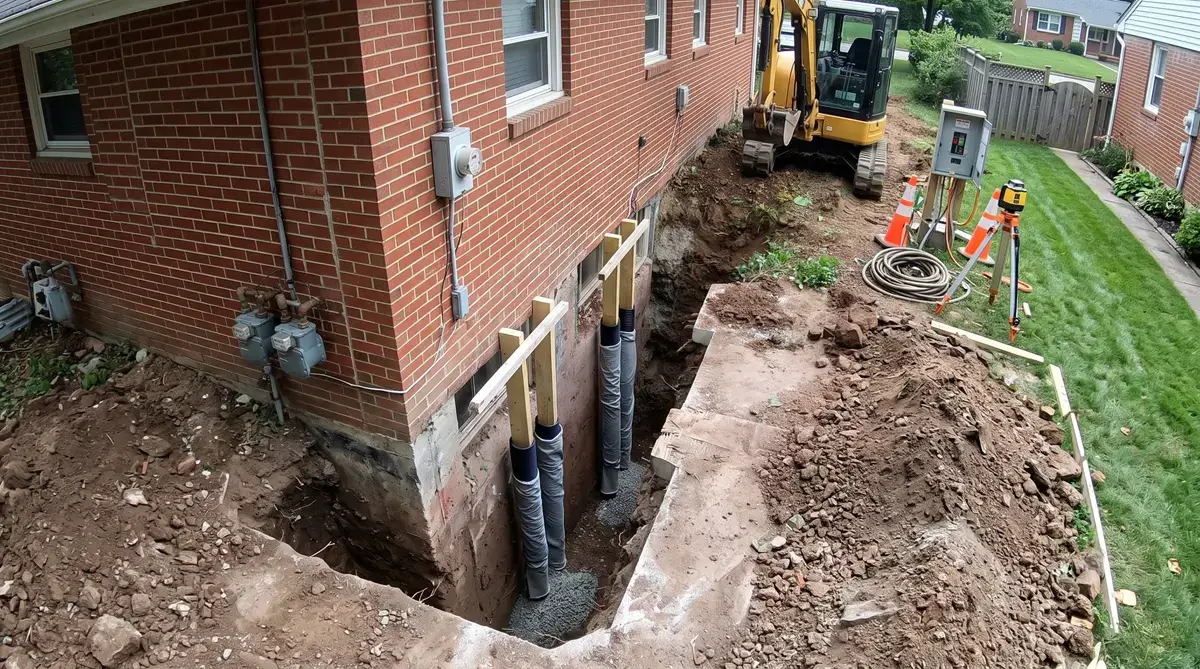
To understand whether your window well drain is connected, it helps to understand how the system is designed.
Most modern homes have a foundation drainage system known as a weeping tile. Despite the name, modern weeping tile systems are typically perforated plastic pipes installed alongside the foundation footing. Their job is to collect groundwater and direct it away from the home.
A properly installed window well drain often connects directly into this system.
Here’s how the process works:
- Rainwater enters the window well.
- Water passes through the gravel layer at the bottom of the well.
- The gravel filters debris while allowing water to flow downward.
- Water enters the drain pipe.
- The drain pipe carries water into the weeping tile system.
- Water is directed toward the sump pump system.
- The sump pump discharges the water safely away from the foundation.
When every component functions correctly, water never has the opportunity to build up around basement windows.
However, if any portion of the system becomes blocked, disconnected, crushed, or collapsed, water may begin accumulating inside the window well rather than draining away.
3 DIY Steps to Test Your Window Well Drain Connection
While a professional inspection provides the most accurate assessment, homeowners can perform several basic tests to determine whether their window well drain appears to be connected and functioning properly.
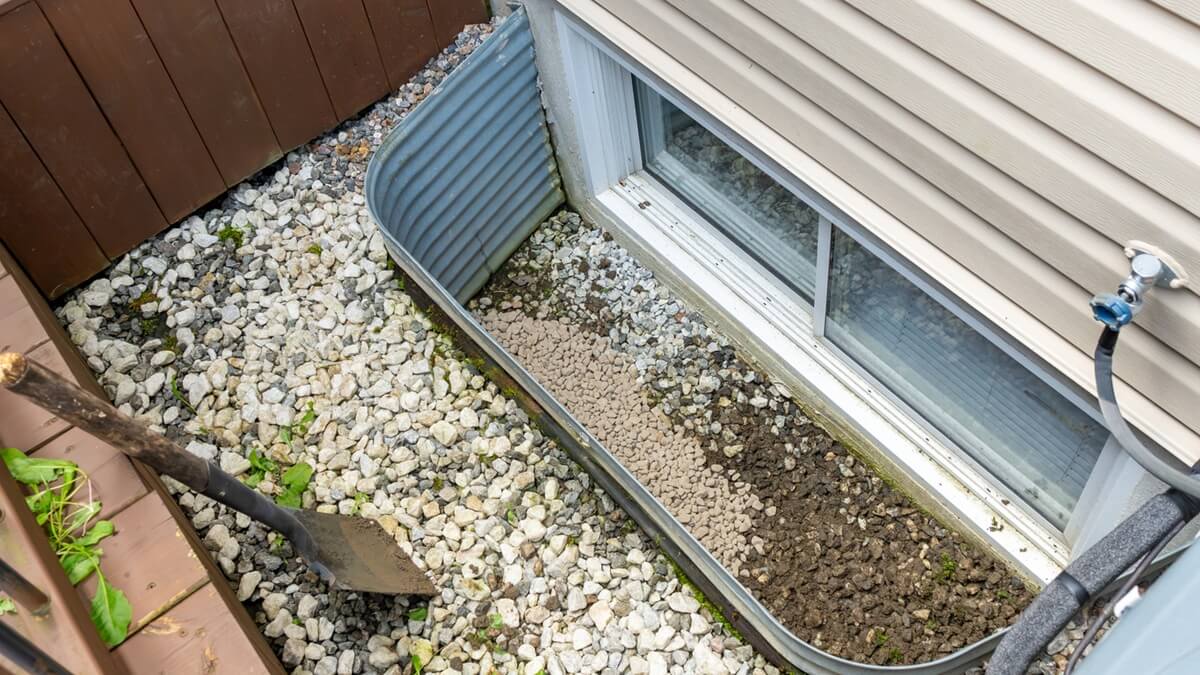
The Visual Inspection and Clearing the Gravel Layer
Start by examining the bottom of the window well.
Most properly installed window wells contain a visible gravel layer surrounding the drain opening. Over time, leaves, mulch, dirt, and landscaping materials can accumulate and create blockages.
Remove any debris from the window well and inspect the gravel.
Look for signs such as:
- Mud covering the gravel surface
- Compacted gravel
- Standing water after rain
- Plant roots growing into the well
- Evidence of sediment buildup
Backfield clogging commonly occurs when fine soil particles gradually migrate into the gravel and drainage system. This restricts water flow and may eventually prevent drainage altogether.
If necessary, carefully remove several inches of contaminated gravel and replace it with clean drainage stone.
A clean gravel layer helps water reach the drain opening more effectively and can sometimes restore drainage performance without further repairs.
The Controlled Water Flush Test
Once the area is clear, perform a simple water test.
Using a garden hose, slowly introduce water into the window well while monitoring how quickly it drains.
In a properly functioning system, the water level should remain relatively low as the drain carries water away.
Observe for the following:
- Rapid drainage
- Slow drainage
- Rising water levels
- Water remaining for extended periods
If water immediately backs up or remains in the window well, there may be a blockage somewhere within the drainage system.
Homeowners with accessible sump pits may also notice additional water entering the sump pump system shortly after performing the test. This can sometimes indicate that the window well drain is connected to the weeping tile network.
However, the absence of visible sump activity does not necessarily mean the drain is disconnected.
Using a Drain Pipe Scope Inspection
For a more definitive answer, many waterproofing contractors use a drain pipe scope.
A small waterproof camera is inserted into the drain opening to inspect the interior of the pipe.
A drain pipe scope can identify:
- Pipe collapses
- Root intrusion
- Sediment accumulation
- Pipe separations
- Standing water
- Improper connections
This inspection method allows contractors to determine whether the drain connects to the weeping tile system and whether the pipe remains structurally sound.
Because underground drainage components are hidden from view, camera inspections often provide the fastest and most accurate diagnosis.
Signs of a Disconnected or Collapsed Window Well Drain
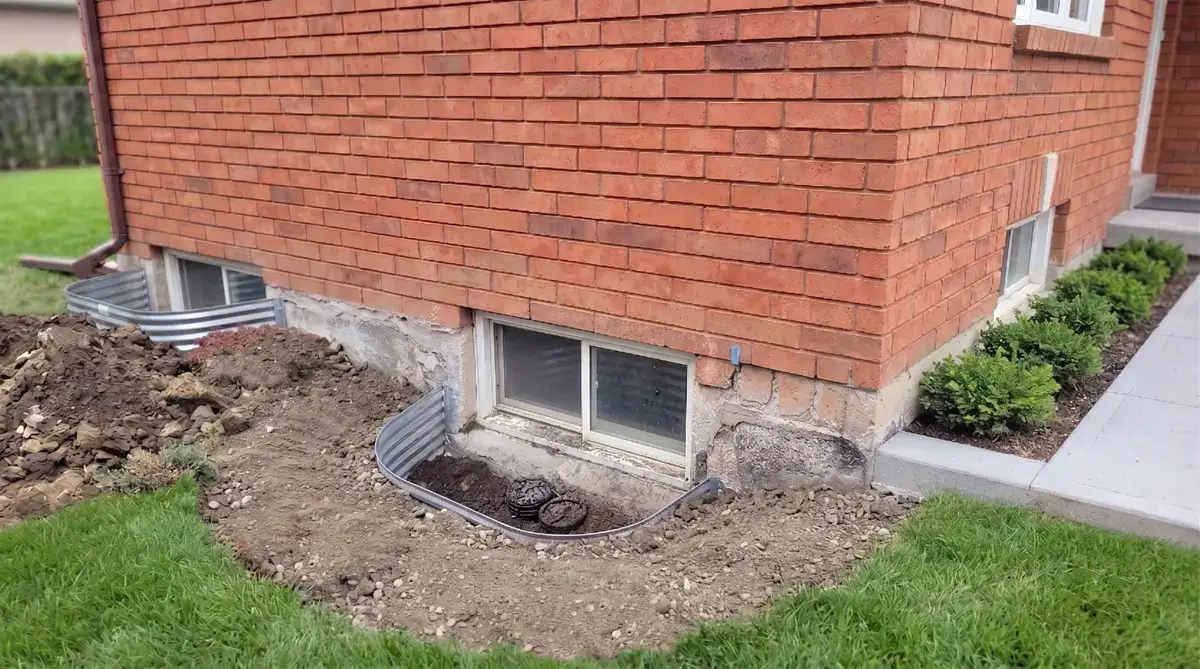
Several warning signs may indicate that your window well drain is no longer functioning as intended. One of the most obvious symptoms is repeated water pooling in window well areas after rainfall.
Other common indicators include:
Frequent Basement Window Flooding: If water regularly enters through basement windows during storms, the drain may be disconnected, blocked, or unable to handle water flow.
Water Remaining for Days After Rain: A healthy drainage system should remove water relatively quickly. Persistent standing water often indicates a drainage failure.
Visible Sinkholes or Soil Settlement: When underground pipes collapse, surrounding soil may begin settling into the void created beneath the surface.
Recurring Sump Pump Problems: If the sump pump system runs continuously or struggles during storms, it may indicate issues elsewhere within the foundation drainage network.
Musty Odours and Moisture: Excess water around foundation walls can increase humidity levels and contribute to mold growth inside the basement.
Evidence of Pipe Damage During Inspection: A professional camera inspection may reveal cracked, crushed, or disconnected drain sections that require repair.
Contact Conterra Foundation & Repair Today
Window well drains serve as an important first line of defence against water intrusion. When connected properly to a functioning weeping tile and sump pump system, they help prevent basement window flooding and reduce hydrostatic pressure around the foundation.
If you notice water pooling in window well areas, slow drainage, or recurring basement leaks, it is wise to schedule a professional inspection before a minor issue becomes a major repair project. Contact Conterra Foundation today to ensure your window well drain is properly connected.