Epoxy vs. Polyurethane Crack Injection: Which is Better for Hamilton Basements?
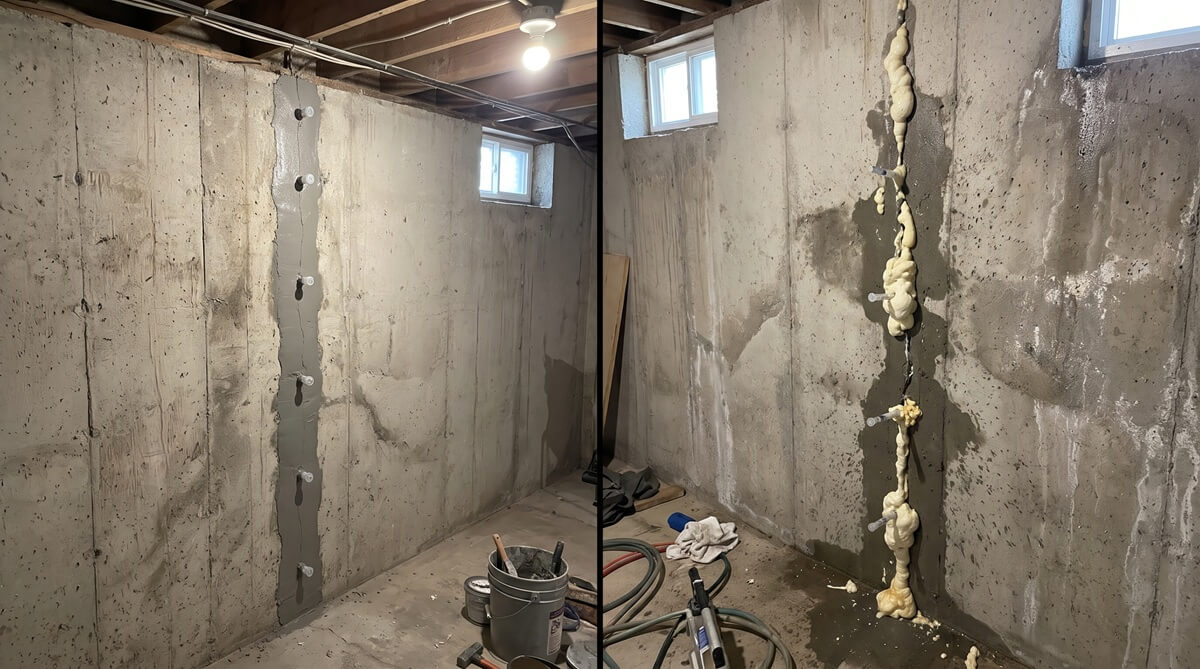
For homeowners in Hamilton, Ontario, maintaining a dry, structurally sound basement is an ongoing priority. Between the expansive clay soils of the Niagara Escarpment, intense freeze-thaw cycles in winter, and heavy seasonal precipitation, concrete wall cracking is an almost inevitable reality for local foundations.
When vertical or horizontal fractures appear, water quickly finds its way inside, threatening finished spaces, personal property, and internal air quality. Fortunately, modern basement concrete repair relies on non-destructive internal crack injection methods that seal these fissures without requiring invasive external excavation.
However, a crucial question arises when preparing for repairs: Should you use epoxy or polyurethane crack injection?
While both materials are injected into foundation cracks to stop deterioration, they serve vastly different functional purposes. Choosing the wrong material can lead to recurring basement water leaks, wasted money, or even compromised structural integrity. This comprehensive guide breaks down the core differences, ideal use cases, and local Hamilton climate factors to help you make an informed decision for your home.
The Core Difference Between Epoxy and Polyurethane Injections
To understand which repair material is superior for your foundation, you must first understand how each chemical behaves once introduced into a concrete fissure.
- Epoxy is a rigid resin engineered primarily for structural rehabilitation. When injected, it cures into a hard, high-density mass that welds the separated pieces of concrete back together. Its primary objective is to restore strength beyond the original capacity of the wall itself.
- Polyurethane, on the other hand, is a flexible polymer foam designed primarily for waterproofing. Upon contact with moisture or moisture in the air, polyurethane expands rapidly—up to 20 to 30 times its liquid volume—filling every micro-fissure and void within the wall before setting into an elastomeric rubber seal.
Understanding this fundamental distinction prevents homeowners from applying a rigid fix to a dynamic water issue, or an expanding foam fix to a structural failure.
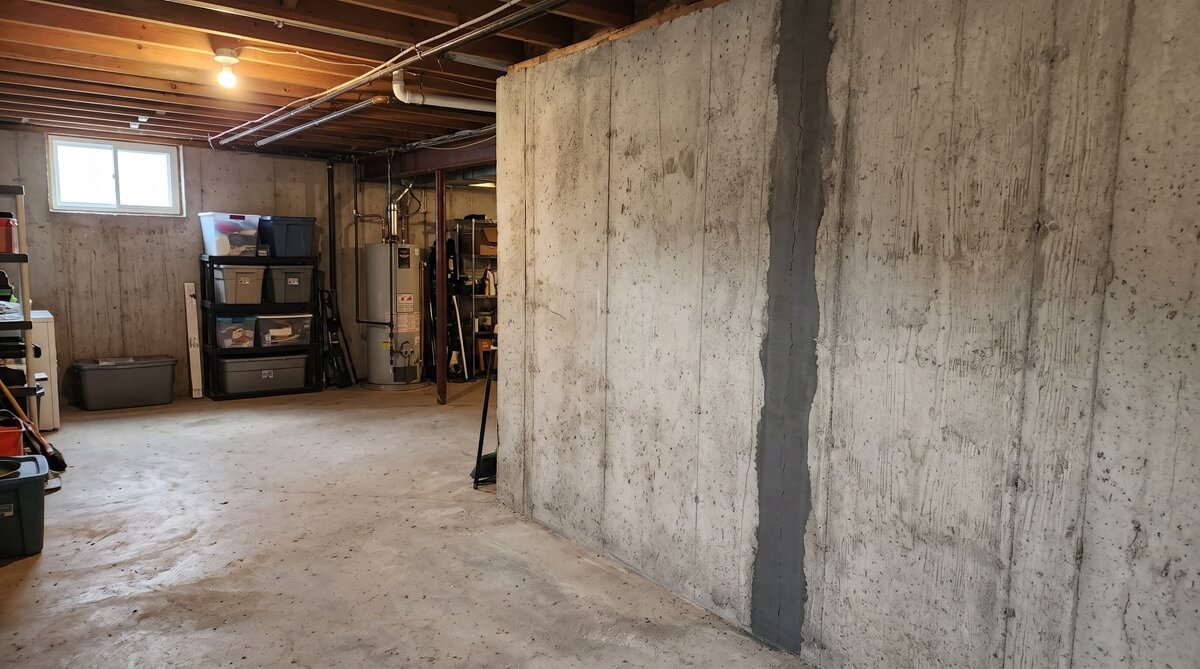
When to Choose Epoxy for Foundation Cracks
When a concrete wall cracking issue threatens the physical stability of a foundation, epoxy is the industry-standard solution. Epoxy resins cure slowly, allowing the liquid to penetrate deep into fine micro-fractures through low-pressure or high-pressure injection ports.
Epoxy is uniquely suited for pour-in-place concrete foundations that have suffered structural displacement, impact damage, or heavy load stress from surrounding earth movement.
Load-Bearing Integrity and Tensile Strength
The primary benefit of epoxy is its incredible tensile strength and compressive strength. In fact, fully cured structural epoxy is often stronger than the surrounding concrete itself.
- Restoring Load-Bearing Capacity: When structural cracks open up due to severe settling, heavy upper-floor loads, or extreme external pressure, the wall loses its uniform load distribution. Injecting structural epoxy welds the sides of the crack back together, successfully reinstating the wall’s original structural integrity.
- Preventing Crack Width Expansion: Once bonded, epoxy will not compress or yield under static weight. It prevents the crack from shifting or widening under normal architectural loads.
- Curing Requirements: Unlike polyurethane, epoxy requires a dry environment to bond properly to the concrete matrix. If water is actively leaking or flowing through the crack during application, the epoxy resin will fail to adhere, compromising the repair. Therefore, epoxy is strictly utilized on dry, non-leaking structural cracks.
If your foundation crack is wider than a quarter-inch, shows displacement (one side sticking out further than the other), or runs horizontally across a wall, epoxy is typically the primary structural repair resin required.
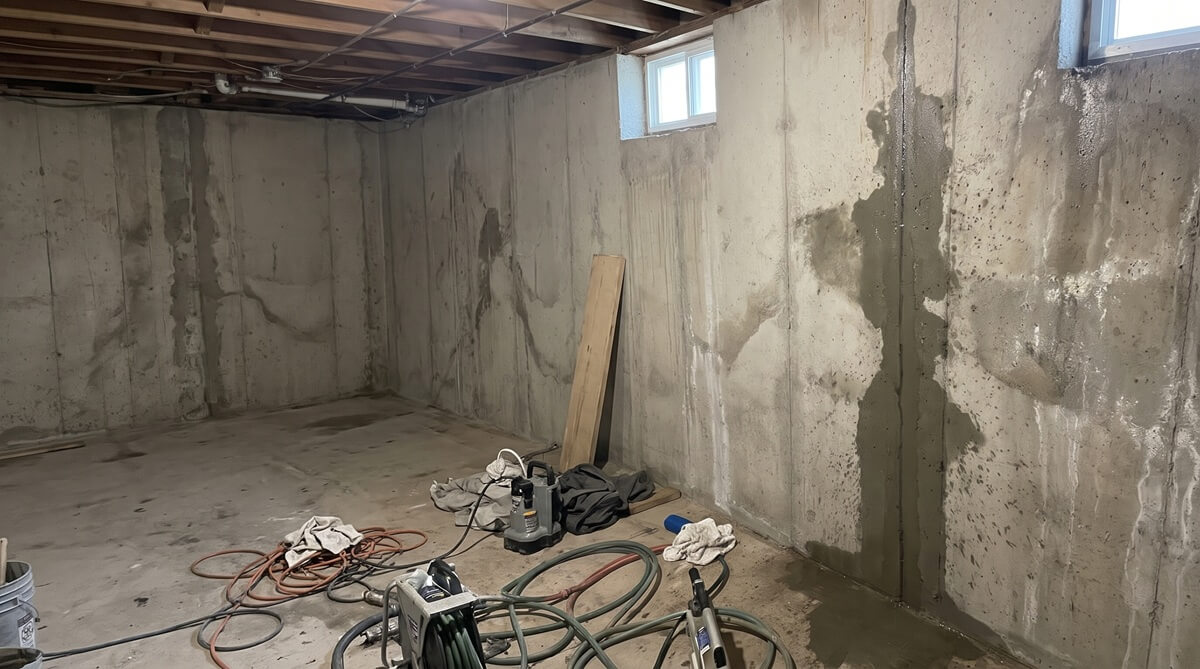
When to Choose Polyurethane for Foundation Cracks
While epoxy handles structural restoration, polyurethane reigns supreme when addressing baseline water leaks and seepage issues in residential foundations.
Because basement walls in Southern Ontario are constantly exposed to moisture, finding a completely dry crack can be difficult. Polyurethane resin thrives in damp environments—in fact, water acts as a catalyst that activates the foaming reaction.
When injected under high pressure, polyurethane penetrates entirely through the depth of the basement wall, expanding out the back of the foundation into the soil to form a custom, chemical grout barrier on the exterior face.
Managing Active Leaks and Soil Movement in Southern Ontario
Hamilton’s geography presents unique challenges for foundation stability. The region features varied geological strata, ranging from heavy, moisture-retaining red clay in lower Hamilton to rocky limestone formations along the Escarpment in Ancaster and Stoney Creek.
- Combating Freeze-Thaw Volatility: Southern Ontario experiences rapid temperature swings throughout late autumn, winter, and spring. Water trapped in clay soil expands when frozen, pushing inward against foundation walls. As the ground thaws, the pressure drops. This continuous shifting causes minor foundation flexing. Because polyurethane cures as a flexible polymer, it expands and contracts alongside natural thermal movement without breaking its watertight bond.
- Instant Leak Stop: If you have active baseline water leaks pouring into your basement during heavy rain or spring snowmelt, polyurethane can be injected directly into the flowing water. The dynamic expanding action reacts instantly, stopping water in its tracks within minutes.
- Sealing Complex Void Spaces: Foundation cracks are rarely straight, uniform lines. They feature jagged inner pockets, tie-rod holes, and secondary micro-fractures. Expanding polyurethane travels through the path of least resistance, expanding outward to fill hidden internal voids that liquid epoxy might simply trickle out of.
Side-by-Side Comparison: Cost, Lifespan, and Application Time
Selecting the right repair method involves balancing immediate costs against long-term reliability and installation constraints. Here is how epoxy and polyurethane injections compare across key performance categories:
Structural Epoxy Injection
- Primary Function: Structural rehabilitation & structural integrity restoration.
- Material Flexibility: Rigid with zero flexibility once fully cured.
- Moisture Tolerance: Requires completely dry concrete for proper bonding; fails in active water.
- Tensile Strength: Exceptionally high, curing to a state stronger than the surrounding concrete.
- Injection Method: Typically low-pressure injection for deep, slow penetration.
- Curing & Expansion: Does not expand; cures slowly over 12 to 24 hours.
- Lifespan Expectancy: Lasts the lifetime of the structure, provided no further structural movement occurs.
- Cost & Prep: Moderate to high cost due to precise surface preparation and port sealing requirements.
Flexible Polyurethane Injection
- Primary Function: Waterproofing and sealing active baseline water leaks.
- Material Flexibility: Highly flexible polymer with elastomeric, rubber-like properties.
- Moisture Tolerance: Requires moisture or active water to catalyze the expansion process.
- Tensile Strength: Moderate structural strength with high elongation elasticity to tolerate shifts.
- Injection Method: Applied via high-pressure injection or low-pressure expanding foam systems.
- Curing & Expansion: Expands rapidly (20x to 30x its original volume) within minutes.
- Lifespan Expectancy: 20+ years of active protection without drying, cracking, or shrinking.
- Cost & Prep: Highly cost-effective due to fast application and immediate leak sealing.
Why a Professional Diagnostic Beats a DIY Injection Kit
With big-box home improvement stores offering off-the-shelf crack repair kits, many homeowners are tempted to attempt a DIY fix. While these kits often contain basic polyurethane or low-grade epoxy, DIY crack injection carries a high failure rate for several critical reasons.
1. Misdiagnosing the Root Cause
Injecting expanding polyurethane into a crack caused by active structural deflection won’t stop the wall from moving. If the soil pressure continues to push inward, the rigid concrete will simply snap open a new crack right alongside the polyurethane plug. Conversely, injecting epoxy into a crack with active water flow guarantees an immediate bonding failure and wasted money. A professional technician evaluates soil dynamics, water tables, and wall stress to choose the correct repair medium.
2. Incomplete Fluid Penetration
Standard surface pastes and low-grade injection ports included in retail kits rarely hold up under the necessary pressure required to drive chemical resins through the full thickness of an 8-inch to 10-inch poured concrete wall. Professionals use specialized high-pressure injection equipment (delivering up to 1,000 to 3,000 PSI) to ensure the chemical travels completely from the interior face out to the exterior dirt line.
3. Preparation and Safety
Proper basement concrete repair requires mechanical grinding, precise port placement, surface seal capping, and thorough surface dust removal. Inadequate prep work leads to ports popping off under pressure, spreading messy chemical resins across your basement floor and leaving internal voids completely unsealed.
4. Comprehensive Warranty Protection
A DIY kit offers zero recourse if water leaks return during the next heavy storm. Professional foundation repair specialists provide long-term, transferable warranties, ensuring that your home remains dry and structurally sound for decades to come.
Contact Conterra Foundation
When determining whether epoxy or polyurethane is better for your Hamilton basement, the answer ultimately depends on the specific nature of the damage:
- Choose Epoxy if the crack is dry, wide, structural, or causing structural wall displacement, and your goal is to restore the original structural integrity of the concrete wall.
- Choose Polyurethane if the crack is leaking water, exposed to dynamic seasonal freeze-thaw movement, or caused by basic concrete shrinkage, and your primary goal is reliable waterproofing.
In many real-world foundation repairs, professional contractors use a combination of techniques, addressing structural reinforcement needs while installing flexible seals to handle water ingress.
If you have discovered concrete wall cracking in your foundation, avoid waiting until the next heavy downpour causes severe water damage. Contact Conterra Foundation to discuss on-site structural diagnostics and secure your foundation with the exact injection technology it needs.