Bench Footing vs. Underpinning: Choosing the Right Method for Your Basement Renovation
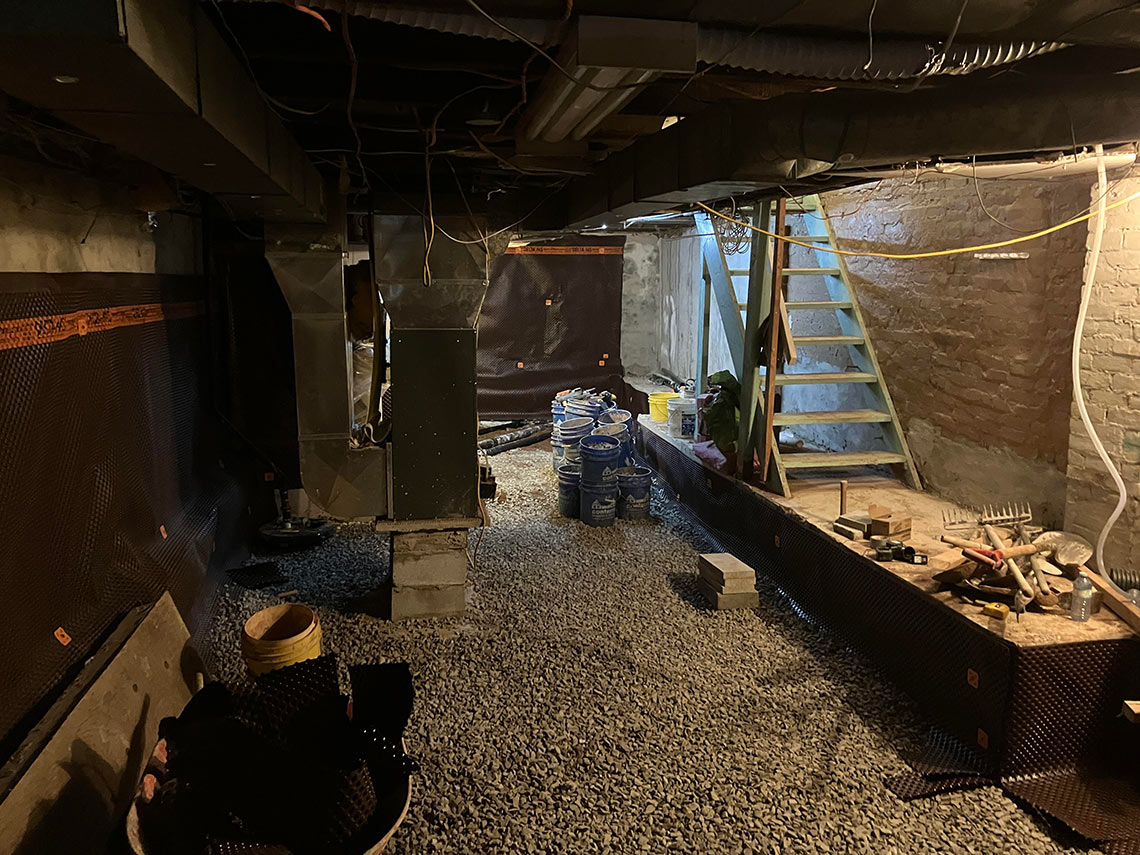
Renovating a basement is one of the most effective ways to unlock hidden potential in your home. Whether you’re planning a basement suite renovation, a home office, or a rental unit, one challenge often stands in the way: ceiling height. Many older homes weren’t built with modern living standards in mind, leaving basements feeling cramped and underutilized. That’s where structural solutions like lowering the basement floor come into play.
Two of the most common methods, foundation benching and underpinning, offer distinct paths to achieving a basement height increase. Each comes with its own costs, benefits, and trade-offs. Understanding these differences is key to maximizing living space while staying within budget and meeting structural engineering requirements.
The Quest for Ceiling Height: Why Lower Your Basement?
Modern building codes and homeowner expectations have shifted significantly over the years. Today, a comfortable, livable basement typically requires ceiling heights of at least 7 to 8 feet. Older homes often fall short of this standard, making basement areas feel more like storage spaces than functional living areas.
Lowering the basement floor solves this problem by increasing vertical clearance without altering the home’s exterior profile. This approach is especially valuable in urban areas where expanding outward or upward isn’t feasible.
From a financial perspective, increasing ceiling height can significantly boost property value. A properly executed basement suite renovation can generate rental income or increase resale appeal. More importantly, it transforms previously unusable square footage into comfortable, code-compliant living space.
Option 1: What is Underpinning?
Underpinning is widely considered the gold standard for lowering basement floors. It involves excavating soil beneath the existing foundation and extending the foundation walls deeper to support the structure at a lower level.
The Process and Benefits
The underpinning process is methodical and highly engineered. Contractors excavate sections beneath the existing foundation walls in stages, ensuring the structural integrity of the home is never compromised. New concrete footings are poured below the original ones, effectively lowering the entire foundation.
This method offers several advantages:
- Maximum space utilization, since the foundation walls are extended downward and the full basement footprint is preserved
- Improved structural integrity, as underpinning can reinforce and stabilize an aging foundation
- Increased property value due to a full-height, unobstructed basement
- Greater design flexibility, making it ideal for open-concept layouts or rental units
For homeowners focused on maximizing living space, underpinning provides a clean, seamless result without sacrificing square footage. You can read more about the considerations of basement underpinning here.
Cost Considerations
One of the biggest concerns with underpinning is cost. The underpinning cost in Ontario typically ranges from $350 to $600 per linear foot, depending on factors such as soil conditions, access, and depth requirements.
Additional expenses may include structural engineering assessments, permits, inspections, waterproofing upgrades, and interior finishing after excavation. While the upfront investment is significant, it often pays off in long-term value and usability.
Option 2: What is Bench Footing?
Foundation benching, also known as bench footing, is a more cost-effective alternative to underpinning. Instead of extending the existing foundation downward, this method involves pouring a new footing inside the basement, set back from the original walls.
The Process and “The Ledge” Trade-off
With bench footing, the contractor excavates the basement floor to the desired depth but leaves the existing foundation untouched. A new concrete bench or ledge is built along the perimeter to support the structural load.
This approach simplifies construction and reduces risk, but it introduces a key compromise: the ledge takes up space inside the basement.
Typically, the bench extends one to three feet inward from the walls. This reduces usable square footage and can affect how the space is designed and furnished. While some homeowners incorporate the ledge into built-in seating or storage, it still limits layout flexibility compared to underpinning.
When Benching Makes Sense
Bench footing is often the right choice in situations where budget and practicality are the main priorities. It is generally 30 to 50 percent less expensive than underpinning and can often be completed more quickly.
It also works well for partial renovations or in cases where the existing foundation is not suitable for underpinning. Homeowners who want a basement height increase without committing to a higher-cost solution often find benching to be a reasonable compromise.
Comparison: Cost, Time, and Usable Square Footage
When comparing underpinning and foundation benching, the differences come down to three main factors: cost, timeline, and usable space.
Underpinning is the more expensive option and typically takes longer to complete due to the complexity of the work and the need for careful staging. However, it preserves 100 percent of the basement’s footprint, offering maximum usable square footage and complete design freedom. It also strengthens the existing foundation, which can be an added long-term benefit.
Bench footing, on the other hand, is more affordable and faster to execute. It avoids working beneath the existing foundation, which simplifies construction. The trade-off is reduced usable space due to the interior ledge, along with some limitations in layout and design.
Ultimately, the decision is a balance between budget and how much of the basement you want to fully utilize.
Which Method Adds More Value to Your Hamilton Home?
When evaluating foundation benching versus underpinning, the best choice depends on your renovation goals and long-term plans.
If your priority is maximizing living space and creating a high-quality basement suite renovation, underpinning is typically the better investment. It allows you to fully utilize the basement and creates a more natural, above-grade feel. This is especially important in competitive housing markets, where finished basements can significantly influence resale value.
If budget is a primary concern, foundation benching still offers meaningful improvements. It increases ceiling height and usability without the higher upfront cost. While it may not deliver the same level of spatial efficiency, it can still transform a basement into a comfortable and functional area.
Future use also matters. If you plan to rent out the space or build a legal secondary suite, the open layout achieved through underpinning may yield better returns and broader appeal. Tenants and buyers often prefer spaces without structural intrusions.
Regardless of the method you choose, professional guidance is essential. Structural engineering ensures that the work is safe, compliant, and suited to your home’s specific conditions. Soil type, foundation design, and load distribution all need to be carefully evaluated before construction begins.
Contact Conterra Foundation Today
Lowering a basement floor is a powerful way to increase both the functionality and value of your home. Whether you choose underpinning or bench footing, each method can help you achieve the ceiling height needed for modern living.
Underpinning offers maximum space, flexibility, and long-term value, making it ideal for homeowners focused on fully maximizing living space. Bench footing provides a more budget-friendly alternative, delivering improved headroom with some trade-offs in layout.
By understanding these options and working with experienced professionals, you can make a confident decision that aligns with your budget, your vision, and your property goals. Contact Conterra Foundation to ensure you’re making an informed decision for your home.