Detecting “Hidden” Leaks Behind Finished Walls: A Guide for Homeowners
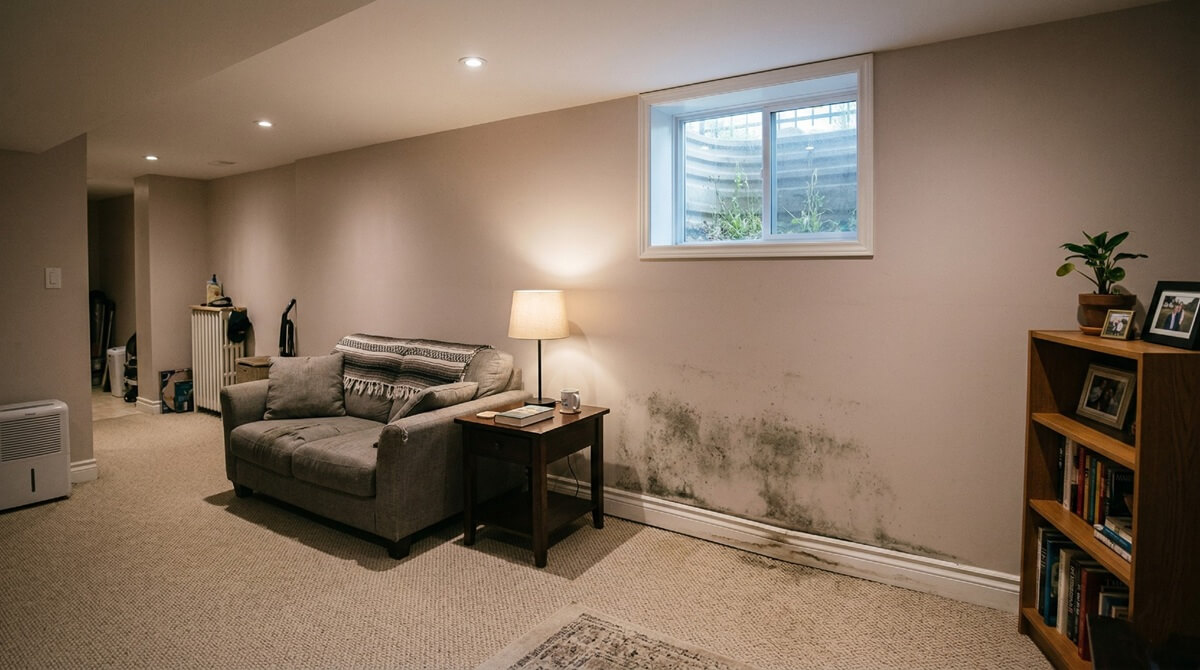
For many homeowners, a finished basement is the crown jewel of the house—a cozy retreat, a home theatre, or a guest suite. However, from a structural perspective, drywall and insulation act as a mask. While they make the space livable, they also camouflage the early warning signs of foundation failure.
In many situations, a minor hairline crack can turn into a major restoration project simply because it was hidden behind a beautiful layer of paint and baseboards. When water finds its way into a finished space, it doesn’t just sit there; it migrates, soaks into organic materials, and creates an environment ripe for structural decay.
The Danger of Finished Basements: Out of Sight, Out of Mind?
The primary challenge with a finished basement waterproofing strategy is the lack of visual access. In an unfinished basement, you can walk the perimeter and spot a trickle of water or a damp crack instantly. In a finished space, the foundation wall is separated from your sight by studs, fiberglass or spray foam insulation, and drywall.
This “out of sight, out of mind” mentality is dangerous. By the time water actually puddles on your carpet or laminate flooring, the leak has likely been active for months. During that time, the water has been absorbed by the wooden studs and the paper backing of the drywall—both of which are primary food sources for mold behind drywall.
Furthermore, “invisible leaks” can lead to hydrostatic pressure buildup against your exterior walls without you knowing it. If the water has nowhere to go, it will eventually force its way through the floor-wall joint (the cove joint) or through porous concrete, compromising the very bones of your home.
5 Signs Water is Seeping Behind Your Walls
Since you can’t see the concrete directly, you have to become a detective. Your home will usually “talk” to you before a catastrophic flood occurs. Here are the five most common red flags:
1. The “Basement Smell” that Won’t Go Away
Many people assume a musty smell in basement areas is just a natural part of living below grade. It isn’t. That earthy, pungent odour is actually the off-gassing of mould and mildew colonies. If you run a dehumidifier and the smell persists, there is a high probability that moisture is trapped in the wall cavity, feeding microbial growth that you can’t see.
2. Warped or Discoloured Baseboards
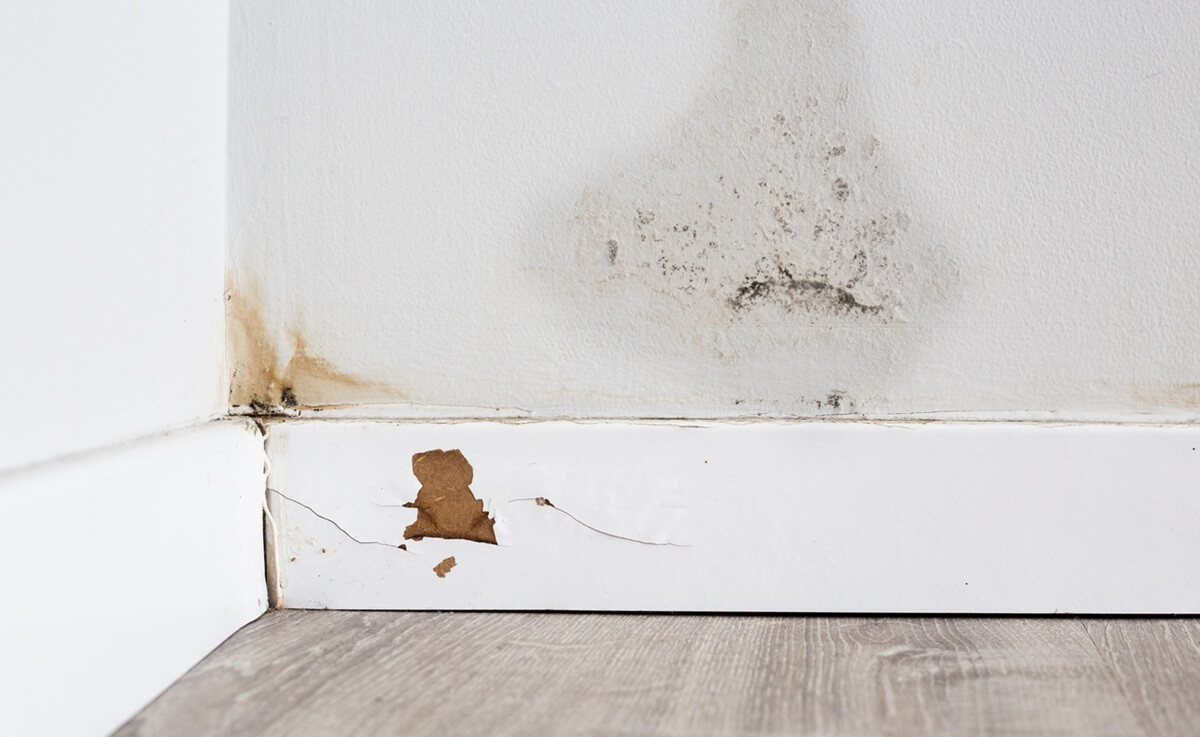
Baseboards are often the first “canaries in the coal mine.” Because water is pulled down by gravity, it collects at the bottom of the wall. Wood and MDF baseboards are highly absorbent. If you notice your baseboards are starting to cup, swell, or show dark staining, water is likely sitting behind the trim on the foundation footer.
3. Peeling Paint or Bubbling Wallpaper
When moisture enters a wall from the backside (the foundation side), it tries to evaporate through the front. As the water vapour pushes against the layer of paint or wallpaper, it breaks the adhesive bond. If you see “bubbles” that feel soft to the touch or paint that is flaking off in a specific area, you are likely looking at efflorescence on drywall or direct water seepage.
4. A Cold Spot on the Wall
Water is an excellent conductor of temperature. During the wetter, colder months, a leak behind the insulation will create a distinct “cold spot” on the drywall. If one section of your wall feels significantly chillier to the touch than the rest of the room, it’s often because the insulation is damp and has lost its R-value, or there is active water transit occurring behind the panelling.
5. Bugs (Silverfish/Centipedes) Appearing Frequently
Pests like silverfish, centipedes, and sowbugs are attracted to high humidity and rotting organic material. If you find yourself constantly reaching for the bug spray in a finished basement that should be dry, these “moisture-loving” insects may have found a breeding ground in the damp wood and paper behind your finished walls.
Non-Invasive Detection: Using Moisture Meters and Thermal Cameras
In the past, the only way to find a leak was to start swinging a hammer. Today, Conterra Foundation and Repair utilizes high-tech, non-invasive tools to “see” through your walls before any demolition begins.
- Thermal Imaging Cameras: These cameras detect infrared radiation. Since damp areas are cooler than dry areas due to evaporative cooling, a thermal camera will show a leak as a dark, “bleeding” blue streak on the screen, even if the drywall feels dry to the casual touch.
- Moisture Meters: A professional moisture meter can be used to measure the moisture content of the drywall. By scanning the perimeter, we can map out exactly where the moisture levels spike, allowing us to pinpoint the source of the leak—be it a window well, a pipe penetration, or a foundation crack.
Making the Hard Call: When to Open the Wall
No homeowner wants to hear that their finished basement needs to be torn into, but delaying the inevitable only increases the cost. Detecting foundation leaks early is the difference between a simple crack injection and a full-scale mould remediation project.
You should consider opening the wall if:
- The moisture meter readings are off the charts: This indicates standing water or saturated materials.
- Visible mould appears on the surface: If it’s on the outside, it’s guaranteed to be worse on the inside.
- The structural integrity is at risk: If you notice the floor beginning to heave or the wall bowing.
Why Waterproofing from the Outside is Often Best
For finished basements, exterior waterproofing is often the preferred “surgical” approach. By excavating the exterior, we can fix the problem at the source without ever touching your expensive interior finishes. We apply a waterproof membrane and ensure the weeping tile is functioning, keeping the foundation wall bone-dry.
Protect Your Investment with Conterra Foundation and Repair
A finished basement is a significant investment in your home’s value and your family’s comfort. Don’t let a hidden leak turn your sanctuary into a health hazard. If you suspect moisture is lurking where it shouldn’t be, it’s time for a professional assessment. Contact Conterra Foundation and Repair today.